Tawr in Myanmar (Burma)
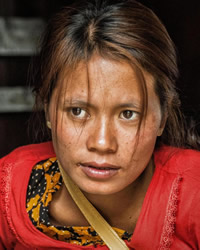
Photo Source:
Asia Harvest-Operation Myanmar
|
Send Joshua Project a map of this people group.
|
| People Name: | Tawr |
| Country: | Myanmar (Burma) |
| 10/40 Window: | Yes |
| Population: | 600 |
| World Population: | 600 |
| Primary Language: | Chin, Tawr |
| Primary Religion: | Christianity |
| Christian Adherents: | 90.00 % |
| Evangelicals: | 80.00 % |
| Scripture: | New Testament |
| Ministry Resources: | No |
| Jesus Film: | No |
| Audio Recordings: | Yes |
| People Cluster: | Kuki-Chin-Mizo (Zo) |
| Affinity Bloc: | Tibetan-Himalayan Peoples |
| Progress Level: |

|
Identity
The Tawr people, whose name is rendered “Torr” on a list of the official ethnic groups of Myanmar, were identified a century ago as a distinct people group, returning a population of just 193 in the 1931 national census. Today, the Tawr continue to exist as a separate ethno-linguistic group, but their history of being the slaves of stronger Chin tribes has created a stigma that persists to the present day. Some historical sources say the name Tawr is derogatory and means “dirty” or “sour” in the Lai Chin language, but the Tawr people themselves now don’t consider it offensive.
Location: One of the smallest groups in Myanmar with a population of just 600 people, the Tawr tribe inhabits a tiny area comprising just two villages (Lamtuk and Ruavan) within Hakha Township in western Myanmar’s Chin State. Tawr territory is about 60 miles (97 km) southwest of Hakha and is bordered by the large Lai Chin group to the north and the Senthang people to the south.
Language: Despite being spoken by so few people, the Tawr language enjoys vigorous use, with all members of the tribe able to speak their mother tongue. All Tawr people are also able to speak either or both Lai (Hakha) Chin and Burmese. In 1973, a Tawr script was created, which was intended to be used by several Chin groups, including the Rengca. Problems arose, however, and in 1980 a disagreement over the orthography created a split and the project was not implemented.
History
The Tawr have legends dating back to the dawn of human history. In the 1890s, two British officers recorded this legend of a Tawr Tower of Babel: “They became very powerful and proposed to pass their time in capturing the sun. They set about building a sort of Jacob’s ladder with poles, and gradually mounted higher and higher off the earth and nearer to their goal, the sun. However, the work became tedious, and they quarrelled among themselves and one day, when half the people were clambering high up on the pole, all eager to seize the sun, the other half below cut it down. It fell northwards, dashing the people…. Those not damaged by the fall did not know their way home again.”
Customs
The Tawr people have a reputation for being shy and reserved, which is unsurprising considering their brutal past. On one occasion, the Tawr decided to declare war on the Falam Chin by killing every man who crossed a bridge. Eighty Falam men were killed before the plot was discovered, and several Chin tribes responded by joining forces and completely destroying the Tawr community. Only those who fled to the plains evaded death but were consigned to perpetual slavery for their ghastly deeds. This and other massacres may explain why a tribe with such a long history has been reduced to just 600 individuals today. Records suggest they were once a much larger tribe.
Religion
Spirit appeasement was so strong among the Tawr in the past that at the time of the 1931 census, all 193 Tawr people were recorded as animists. Vestiges of those ancient beliefs remain and can be seen in some of their traditional festivals, but today almost all Tawr people claim to be followers of Christ.
Christianity
Interestingly, due to mission politics, SIL and other Christian organizations claim there is no Scripture in the Tawr language, when in fact the Tawr New Testament and songbooks have been in use since 2010. The translation is not acknowledged by Western organizations because it was done directly by Tawr church leaders and not through one of the recognized translation ministries. A 2011 report by SIL field workers said: “The Tawr New Testament is currently available and is being used in some Rengca churches. These portions and songbooks have been done independently and were not published by any Bible organization.”