Thaiphum in Myanmar (Burma)
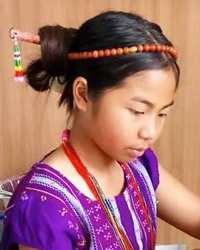
Photo Source:
Asia Harvest-Operation Myanmar
|
Send Joshua Project a map of this people group.
|
| People Name: | Thaiphum |
| Country: | Myanmar (Burma) |
| 10/40 Window: | Yes |
| Population: | 1,200 |
| World Population: | 1,200 |
| Primary Language: | Chin, Thaiphum |
| Primary Religion: | Christianity |
| Christian Adherents: | 80.00 % |
| Evangelicals: | 50.00 % |
| Scripture: | New Testament |
| Ministry Resources: | No |
| Jesus Film: | No |
| Audio Recordings: | No |
| People Cluster: | Kuki-Chin-Mizo (Zo) |
| Affinity Bloc: | Tibetan-Himalayan Peoples |
| Progress Level: |

|
Identity
Until recently, the Thaiphum have remained hidden in relative obscurity, with only the people living in their immediate area in Matupi Township aware of their existence. The Thaiphum have never been counted in past Myanmar censuses, and they only recently appeared on Christian lists of the world’s people groups.
Location: Just four Thaiphum villages (Tangku, Renkheng, Pakheng and Amlai) are home to 1,200 Thaiphum people. They inhabit a tiny, densely forested area of Chin State in western Myanmar, distributed as far north as the town of Matupi. The Thaiphum area is sandwiched between the territory of three large tribes, with the Zotung to the north, Mara to the west, and the Matu to the south and east. The region consists of a chain of high mountains and deep valleys, with the highest peak, Awtaraw, standing over 9,000 feet (2,746 meters) above sea level.
Language: The Thaiphum language, which is spoken by all members of the tribe, is part of the Chin branch of Tibeto-Burman, although its exact classification has yet to be determined. Until recently, Thaiphum was not considered a distinct language but was often grouped together with Matu. Most elderly Thaiphum people can also speak Lai (Hakha) Chin, while the younger generations have been educated in Burmese. The Ethnologue says: “Thaiphum is intelligible to some extent with neighboring languages, such as Asang and Rengca. It has lexical similarities of 72% with Eastern Khumi, 69% with Khumi, 65% with Mro-Khimi, and 66% with Matu.”
History
For centuries, life among the people in this part of Myanmar was full of brutal conflict, with small tribes like the Thaiphum often being bullied and oppressed by larger, more powerful groups. The level of violence experienced in Chin State is reflected in this account from a few generations ago: “A rare but important ceremony with great feasting occurred when a man had killed an enemy and decided to celebrate his triumph. This was revived during the Second World War, when Chin soldiers were killed in action. The relatives of the deceased sought revenge by killing enemy soldiers…. Heads were kept in utmost secrecy, and a ceremony was performed after the war.”
Customs
From their rugged mountainous dwellings, the Thaiphum have always relied on hunting, with many exotic animals found throughout the area, including elephants, tigers, bears, and leopards. British officers in the late 19th century observed: “Tigers and leopards are trapped by placing a platform over the path used by the animal, on which half a ton of stones is piled. The platform is supported by a prop which is dislodged by the animal passing underneath, and the stones falling on the beast kill it…. Small deer and other wild animals are often caught in pits.“
Religion
For countless generations the Thaiphum were animists, appeasing a host of spirits believed to control nature and live within mountains, rivers, trees, and even large rocks. After revival swept through Chin State from the 1960s to the 1990s, most Thaiphum people are now Christians, but an estimated one in five families continue the spirit-worship rituals of their forefathers.
Christianity
While linguists were arguing about whether Thaiphum deserves to be recognized as a distinct language, their church leaders ignored the scholars and moved forward with their plans to have the Bible in their own language. Despite their tiny population, the Thaiphum translated and published the New Testament in 2020, which helped solidify the Body of Christ among this small tribe. Matupi Township, where the Thaiphum live, had its own Bible college in the 1970s, but today’s crop of church leaders usually travels to other parts of Chin State or to Yangon to receive a theological education. Today there are Thaiphum churches as far afield as Thailand and Malaysia, where hundreds of Thaiphum people have moved.