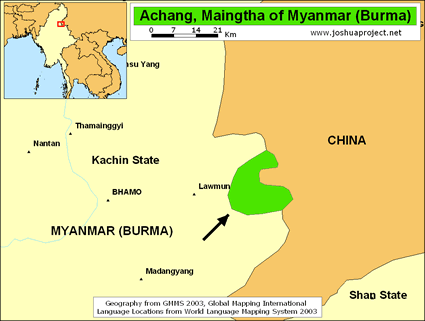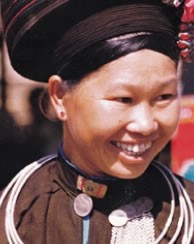

While China acknowledges the “Achang” as one of their 55 official minority nationalities, in Myanmar the Ngochang have traditionally been called by the Burmese name “Maingtha.” Under that name they returned a total of just 689 people in the 1931 census, none of whom were Christians. This book has chosen to use the tribe’s self-name, which is pronounced Ngochang or Nagc’ang in their vernacular.
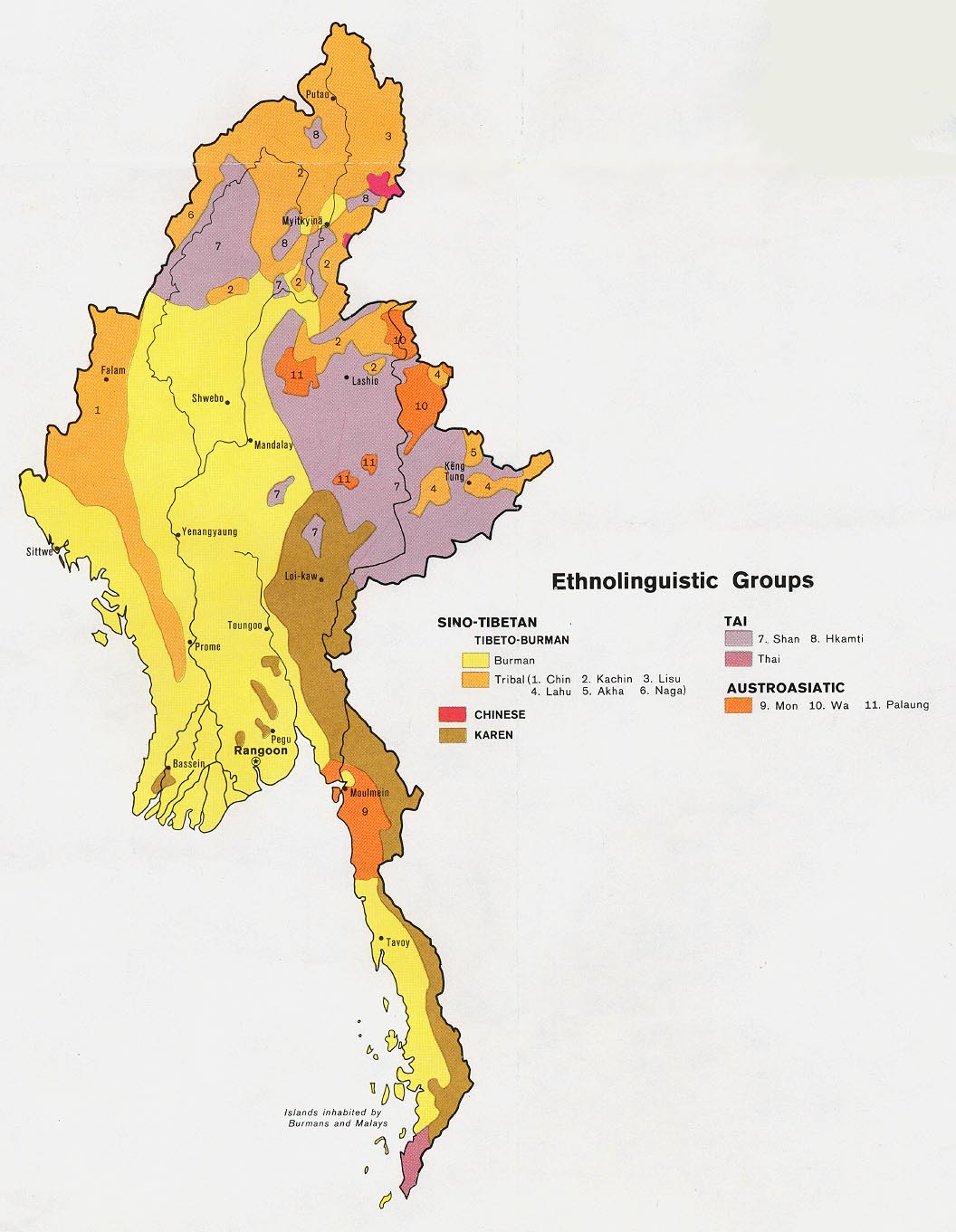
Location: With a population of 39,000 people in northern Myanmar, the Ngochang tribe straddles areas along the China border, with most villages located in the Ngochang Valley west of the Ayeyarwady River in Kachin State’s Bhamo District. A further 34,000 Ngochang people live across the border in China’s Yunnan Province, where they are officially known as the Achang ethnic minority.
Language: The Ngochang language is related to Lhaovo and Lashi, which are also spoken in northern Kachin State. The Ngochang have also adopted loanwords from the languages of their neighbors in all the locations in which they live. Almost all Ngochang people can also speak Burmese, while others have learned Chinese, Shan, Kachin, and other vernaculars used in the area. As Ngochang does not have a written form, the people also use the scripts of their neighbors for reading and writing.
The Ngochang have a rich heritage of passing on their history and culture to future generations by singing ballads and telling folk tales to each other. As a result, “music is one of the mainstays of their culture, and they usually finish all celebrations with songs and dances.” Believed to be descended from the Qiang tribes that dominated the Tibetan border regions in western China two millennia ago, one source states: “The Lhaovo and Lashi peoples first settled along the lower and middle reaches of the Ngochang River, while the Ngochang people journeyed further upstream where they established settlements roughly 1,200 years ago. Lisu settlers later arrived in the area, and these communities were traditionally ruled by hereditary chieftains.”
The handicraft skills of the Ngochang people are well known, with their distinctive knives favored by all ethnic groups in the region. Kachin men, in particular, value the Ngochang knives, and carrying one is seen as a mark of their masculinity. Tobacco, sugarcane, and tea are three of their main crops. The Ngochang like to build their homes near streams on the slopes of hills, and in their villages a narrow trench is dug so that water flows in front of the gates of every home in the village.
The majority of Ngochang, and especially the elderly, hold to the animistic traditions of their forefathers, while approximately 20 percent of Ngochang families are followers of Theravada Buddhism. During a Ngochang funeral, “a cloth ribbon, 32 to 64 feet (10 to 20 meters) long, is attached to the coffin. A Buddhist monk is hired to walk in front of the procession holding the ribbon, which signifies the monk leading the soul of the deceased to the afterworld.”
In recent decades about one-fifth of Ngochang people have converted to Christianity on both sides of the Myanmar-China border, and as a result, today there are churches in most Ngochang villages. By 1992, one source reported there was a church in nearly every Ngochang village in China. Nearby, a large and vibrant Christian community exists among the nearby Kachin Jingpo people, and new Ngochang believers are often invited for training by Kachin church leaders. The Ngochang New Testament was completed in 1992, and in 2010 the full Bible was published to help solidify the faith of the growing Body of Christ among the Ngochang.
Scripture Prayers for the Ngochang in Myanmar (Burma).
| Profile Source: Asia Harvest |