
Identifying the Tai Nua is difficult because their name means “Northern Tai” and is used by various unrelated groups. In China, the Tai Nua have been combined with a dozen other Tai-speaking groups to form the official Dai minority. The 1931 census of Burma returned 19,283 "Shan Tayok" people. Of them, 190 (less than one percent) were Christians and the rest Buddhists or animists. The Burmese label Shan Tayok means “Chinese Shan” and is also applied to the related Tai Mao people, although they have a different cultural identity and dialect.
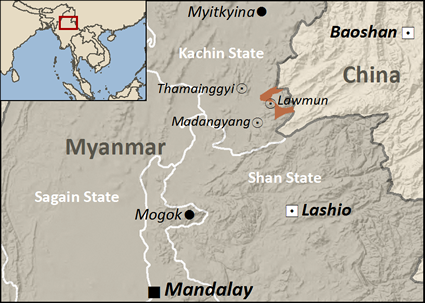
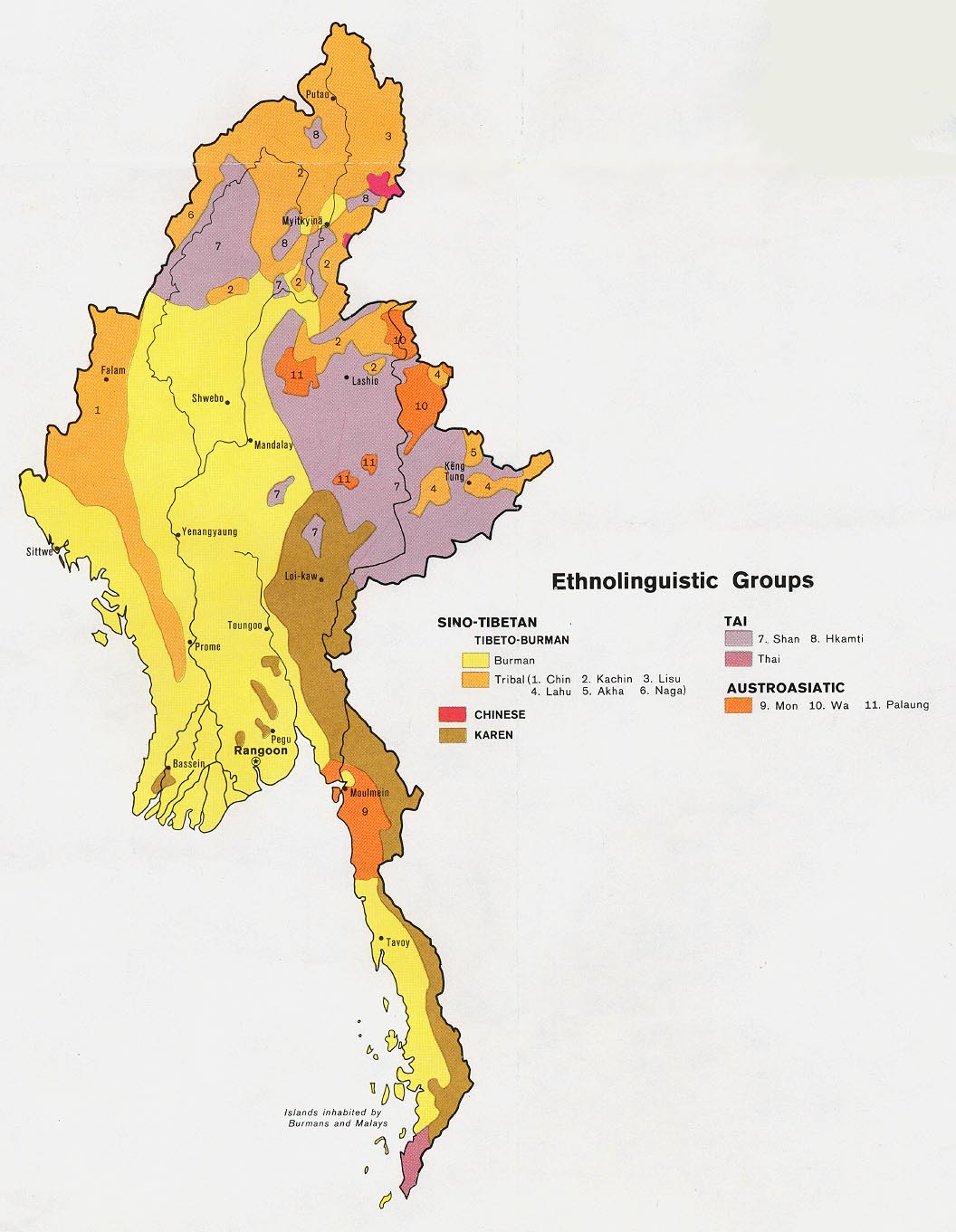
Location: Just over 100,000 Tai Nua people live along the Chinese border in northern Myanmar. Their communities are found in both Kachin and Shan states, with 16 Tai Nua villages in Kengtung District and others in Muse, Bhamo, and Myitkyina. Nearly half a million Tai Nua live in a widespread area of China’s Yunnan Province, with an additional 113,000 in Vietnam and 16,000 in Laos. Southwest China is the homeland of the Tai Nua. Due to constant attacks and plundering by the Chinese, groups of Tai Nua families fled in the early 19th century by three different routes, eventually settling in today’s Myanmar, Laos, and Vietnam.
Language: Linguists have pointed out that Tai Nua is “a name given to at least two quite different Tai groups.” The Tai Nua language profiled here is part of the Southwestern branch of the Tai language family, which is now known as “Kra-Dai.” The Tai Nua in Laos speak a different vernacular from those in China and Myanmar, that appears to be more closely related to the Northern Thai language of Thailand. In this part of Asia, Tai customs and languages such as Tai Nua, Tai Mao, Shan, and Tai Lue often blend into each other rather than having clearly defined divisions where one language stops and another starts. The Tai Nua in China and Myanmar have their own script, called Tai Le.
The Tai Nua prospered during the 17th and 18th centuries, when they established a kingdom at Muang Boo in China, which ruled over many surrounding towns and villages. In addition to the Tai Nua who fled persecution in China in the early 19th century, later waves of migrants left during the 20th century, first to escape hardship and chaos caused by war, and then to flee Communist rule during the excesses of Mao Zedong’s reign of terror from the 1950s to the 1970s.
After a Tai Nua wedding ceremony, the bridegroom goes to live with his new wife’s family. Traditionally, “he must take with him gifts of tea, rice, meat, bananas, four eggs, and two salted fish for his new in-laws. Upon arrival, the village elder takes the packets of tea and rice out to the road and calls on the spirits of heaven and earth to witness the marriage. He then ties a white thread seven times around the wrist of the bride and once around the groom’s wrist to indicate their unbreakable commitment to each other.” The Tai Nua observe many festivals, the greatest of which is the lunar New Year celebration, called Jin Leun Sam. People return to their hometowns to celebrate with family and friends.
Although almost all Tai Nua people claim to be Buddhists, they have many animistic and polytheistic aspects mixed into their beliefs. The very first Tai deity was Shalou, the god of hunting. One source says: “Before a hunt, sacrifices were offered to Shalou to avert danger and to ensure a successful hunt.”
An estimated 1,000 Tai Nua Christians live in Myanmar today, with a similar number across the border in China. Work is underway to translate the New Testament into Tai Nua and should soon be completed. Initial indications suggest many Tai Nua people may come to faith in Christ after reading God’s Word in their own language.
Scripture Prayers for the Tai Nua in Myanmar (Burma).
| Profile Source: Asia Harvest |