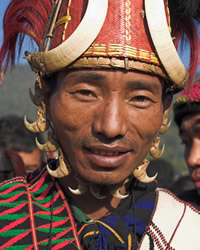

The Shangwan in Myanmar have never been recognized by the government, in sharp contrast to their counterparts a short distance away in India, where they have been granted status as a Scheduled (official) Tribe under the name Sangwal. The people say the original name of their group was Ngenwin, although they don’t know how that name was derived or what it means. According to one of their stories, “two brothers were roaming in the forest when the younger brother arrived in a village via a shortcut, jumping like a dog. He was named Sangwal.”
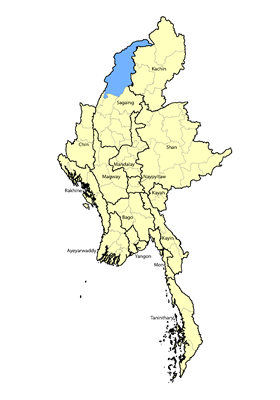
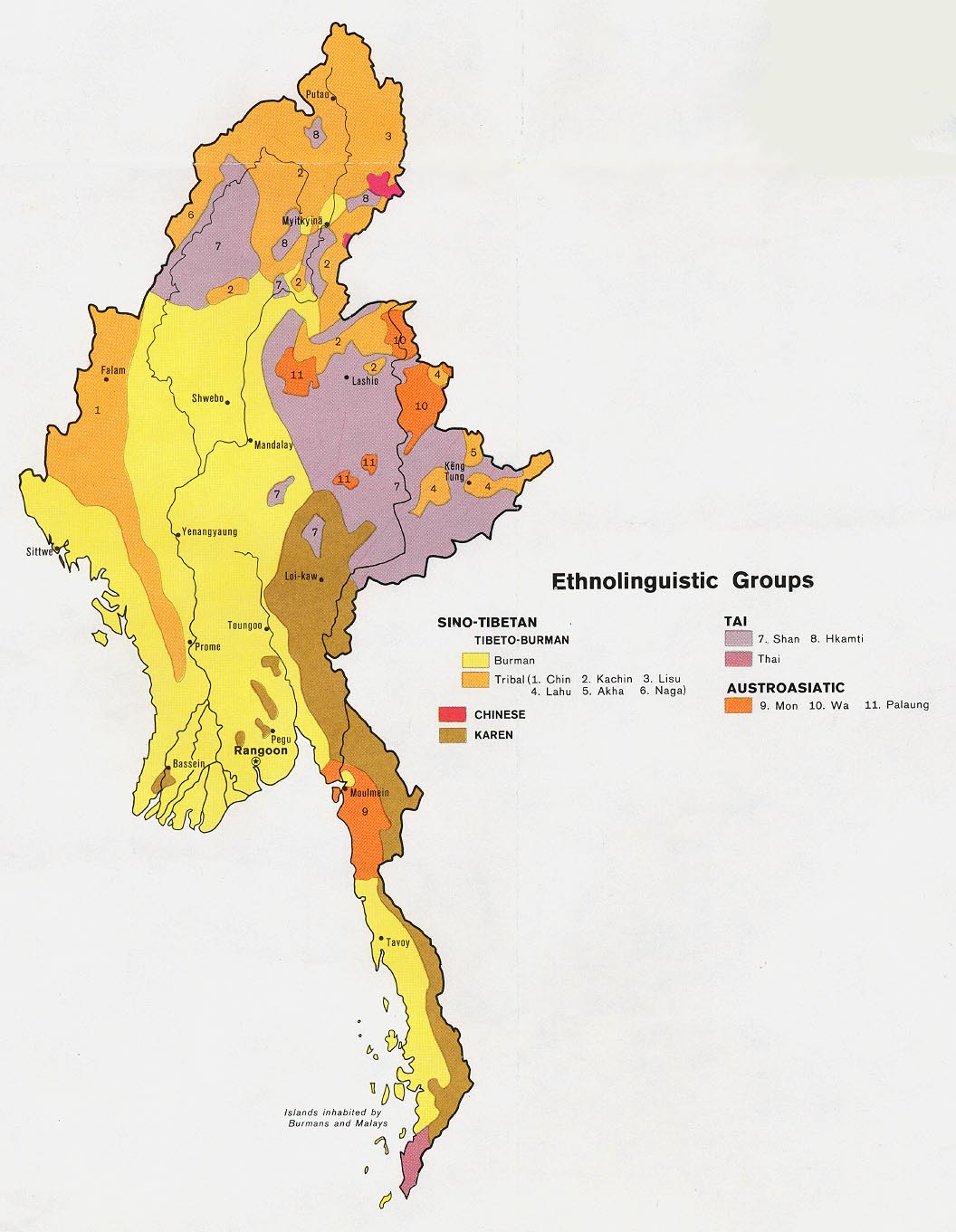
Location: Six hundred members of the Shangwan tribe live near the strategic border town of Pangsau, which sits at the bottom of the Pangsau Pass between India and Myanmar’s Sagaing Region. Their main community resides in Woktham village, which at least 40 Shangwan families share with people from six other Tangshang tribes. Across the border, the 2011 Indian census recorded 288 Shangwan people living in the Changlang area of Arunachal Pradesh. Shangwan villages are built next to dense evergreen forests at elevations of about 1,150 feet (350 meters) above sea level. The area receives heavy rainfall.
Language: The Shangwan vernacular is part of a linguistic group labeled Jogli (also spelled Yougli), which includes several related varieties, including the two Myanmar-based dialects of Haqcyeng and Ngaimong. Since 2017, Shangwan Christians have been determined to translate the Bible into their language, but their efforts have faced opposition from other tribes in the area who want them to use the Tangsa Bible employed by some groups in northeast India. The Shangwan find that translation unsuitable for their needs, however, and have pressed ahead with their own translation.
The Shangwan (Sangwal) people in India agree that their forefathers came from the Pangsau area in Myanmar about 100 years ago. According to one of their legends, “Once, a brother and sister lived together as a couple. The offspring of that calamitous relationship could never become a child, but only a stone. Angry and disappointed, the couple proceeded to set the stone on fire, which splintered into a thousand little pieces. Each piece became a human couple, one of which founded the Shangwan line.”
The Shangwan community is divided into at least seven clans named after their ancestors. Various taboos are in place prohibiting marriage between members of certain clans, while others are free to marry. Shangwan marriage ceremonies consist of three days of feasting and drinking, during which “seven pigs are given to the bride’s father as the bride price…. From the third night onwards, the new couple begin to sleep together as husband and wife…. Divorce is not permitted in the community.” Shangwan women are renowned for their weaving and basketry skills which feature colourful geometric designs and floral motifs. People love to perform traditional songs and dances, and elderly women preserve their culture by teaching their songs to the young girls.
Countless generations of Shangwan people worshiped evil spirits and followed the advice of shamans (called shongwa in their language) to sacrifice their scarce resources to placate the spirits. Today, the overwhelming majority of Shangwan people in Myanmar are Christians, with just a relative handful of animists remaining in their midst. Similarly, the 2011 census taken in India recorded 95 percent of Sangwal people in that country as followers of Jesus Christ.
Many Shangwan people in Myanmar live in poverty under the clutches of opium and alcohol, but God has raised up a remnant of committed disciples to spread light and salt in their communities. With the rise of social media, video clips of Shangwan believers have emerged, including one showing young Christians practising a worship song.5 After a book of 50 Bible stories was translated into Shangwan in 2018 and was well received by the people, the New Testament with Psalms and Proverbs was completed in 2025, providing the Scriptures for the Shangwan people in their own language for the first time in their history.
Scripture Prayers for the Shangwan in Myanmar (Burma).
| Profile Source: Asia Harvest |